By Deborah Kline, Ed.S.

I watched her grasp on the pencil tighten. Legible lines dissolved into manic scribbles. Her body tense as she gave in to the impulse of chucking the pencil across the table. As the projectile flew, her countenance melted into frustration and shame. A mistake. Again.
In school, the teachers made her correct her assignments, over and over, again and again. Yet, she still was not learning because she never felt capable. She never had the supports her brain needed to process the information. Pencil marks, never fully erasable, became scars from mistakes, triggering embarrassment and defeat as she routinely hid her work from her classmates. Shame precluded learning.
“Everything I do is a mistake. I’m a mistake.” Her words of despair.
This is my own child’s story of academic trauma. Diagnosed with ASD, ADHD, vision impairment, and multiple learning disorders, while none of them severe, the persistent struggle to get things right led to almost daily emotional breakdowns by 3rd grade until we finally took action to bridge the learning gaps.
For so many students, learning disabilities lead to perpetual shame over making mistakes.
What often looks like disobedience, disruptions, or task avoidance is most often a child’s silent cry for help.
Research* suggests the primary reason a child acts out is to avoid a difficult task. Fear drives this behavior – he or she does not believe he or she has the ability to complete the task. This behavior is called “task avoidance.” Task avoidance is not endemic to just children. Adults also avoid tasks they do not feel comfortable doing, but, unlike children, we have the executive function skills to plan our actions and push through paralyzing emotions.
Learning is hard work for most kids. The frustration of making frequent mistakes absolutely cripples some students – particularly those whose brains process information differently. This is why learning tools are incredibly important for learners.
Learning tools provide SAFE and non-consequential supports, structures, and practice as they develop new skills.
“What a child can do today with assistance, she will be able to do by herself tomorrow.”
Lev s. Vygotsky
What is a learning tool and why is it important?
Learning tools, called “scaffolds” in the education world, are temporary supports providing a safe way to build recognition and confidence in a skill. As mastery develops, the tool is removed so the child’s brain takes over and independent reproduction of the skill can take over.
Some children need supports longer than others, requiring more repetition to move the skill into his or her long-term memory. However, be careful that the use of the tool does not become a permanent crutch inhibiting long-term progress.
Think of a 1-year-old learning to walk, cruising from furniture support to furniture support, as she masters the ability to walk. The child is safely learning to explore, gain confidence, and build the muscles and cognitive skills to one day let go and do it on her own. The furniture support is the child’s learning tool.
An example from my piano lesson studio: For most students, we initially label notes on the staff and keyboard to help build recognition. As the child practices, building visual and muscle memory of the keys and notes, we remove the labels, tab by tab. The child’s brain fills in the blanks, moving concepts from short term memory to long term memory. Soon, the student does not need supports to remember the notes.
How do you know if a learning tool is helpful?
When we look for or create a tool, have one goal in mind: transferability.
I.e. Is this something that can be transferred into real world situations? Can the child retrieve the tool when in a testing situation away from the daily learning environment?
Also ask: Can this support be extinguished – gradually decreased and eventually removed – as the child achieves mastery?
Without further ado, let’s discuss practical learning tools to improve instruction:
ORGANIZATION
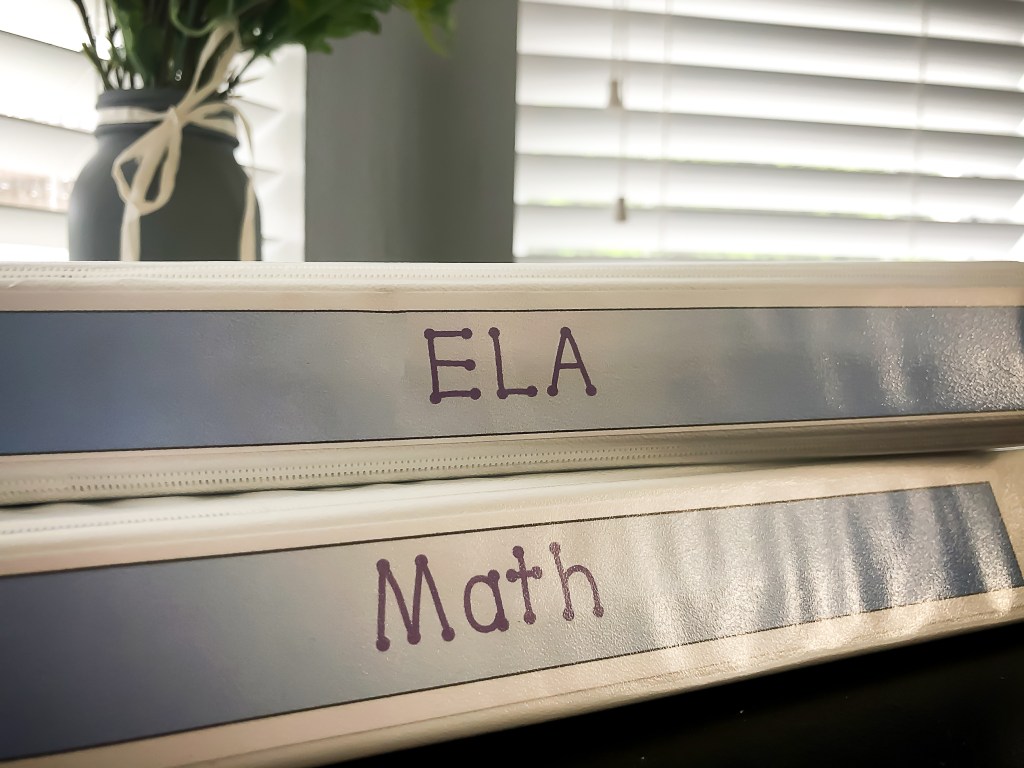
This seems like a no-brainer, but keeping resources and tools close by and organized is essential for little brains processing a lot of new information. Find a system which works for you. Keep it consistent, simple, and relevant. Provide lots of labels and visual reminders. And, laminate…
LAMINATION and/or WHITE BOARDS
You’re probably thinking “Lamination? Why is that important?”
Teachers LOVE lamination – but for more reasons than keeping those cutesy “you can do it” posters from getting wrinkled during years of use.
Laminating activities provides a fun means of practicing a skill without the potential trauma of constant erasing, messy sheets, and ripped paper.
Many classrooms use whiteboards for practice – and if you have access – use them. However, laminated sheets of white paper are a cheaper alternative to individualized whiteboards.
Word of Caution: In using the white sheets, constantly monitor the amount of tasks required of the student. The simple act of copying a math problem to a white sheet can lead to careless, unnecessary mistakes, creating further frustration. The use of white liminated sheets is to help, not complicate.
If you’re in the market, desk laminators are in the $20-30 range. https://amzn.to/3icI9Sw
Sheets are about $15 for a pack. https://amzn.to/33eoahW
Don’t want to invest in a laminator? You can also use sheet protectors https://amzn.to/2GlhKEM or just purchase the lamination sheets https://amzn.to/33eoahW
UNMELTED LAMINATION SHEETS are an alternate option which work really well with workbooks. These sheets reduce the need to copy from the original paper; thus, one less task. You can move the sheet from lesson to lesson and use the same workbook with multiple students or for multiple days of practice.
How is laminated practice different from pen and paper practice?
First, markers are intrinsically motivating. Many kids simply love using color while others like being able to choose a color which represents themselves. It connects the learner personally with the process of learning.
Second, pencil marks do not always erase easily while marker on laminated or sheet protectors wipes clean with a simple tissue and water. This is especially important when younger students and those with dysgraphia bear down too hard with pencils. The pencil breaks, the eraser tears through the paper, the paper becomes messy. The child’s brain becomes overwhelmed, the mistake breeds shame, and the child shuts down. I see this over and over and over with students and children.
Third, pencil on paper feels permanent. Pen on paper produces even more permanence. In most school settings, pencil on paper answers are almost always graded; thus, those answers contain consequence. For some kids, the fear of those consequences cripples what ability he or she does possess.
Using the white board/laminated tool to practice gives the child a safe way to practice without the permanency – and/or potential consequence – of paper and pencil.
HIGHLIGHTING, COLOR-CODING, and TABBING
Highlighting is another no-brainer tool, helping the brain identify and retrieve key information quickly. However, with learners who struggle with executive function and visual processing challenges, adding an additional tool of a color-coded system of highlighters and tabbing can be tremendously beneficial. I even used color-coded highlighting and tabs to help organize my research for my dissertation.
These are just a few of the tools we use on a regular basis. They are by no means the exhaustive list. If you have a tool you have found useful, please comment and share below. We are a learning community!
If you need assistance creating tools for your child’s learning, reach out to me and we can create a plan for strengthening your instruction and enhancing the learning process, ensuring your student’s learning is successful! You can reach me at DeborahKlineConsulting@gmail.com
This is part 1 of this series on Learning Tools. Stay tuned for part 2 where we delve into Elementary Math Tools and Part 3 – English and Language Arts Tools.
*References
| Lewis, T. J., Mitchell, B. S., Harvey, K., Green, A., & Mckenzie, J. (2015). A Comparison of functional behavioral assessment and functional analysis methodology among students with mild disabilities. Behavioral Disorders, 41(1), 5–20. https://doi.org/10.17988/0198-7429-41.1.5 |
 Deborah Kline, EdS